Europe’s moral collapse: Ukraine, NATO, and death of a civilization
The real tragedy of Europe is not that it makes mistakes, but that it refuses to learn from them
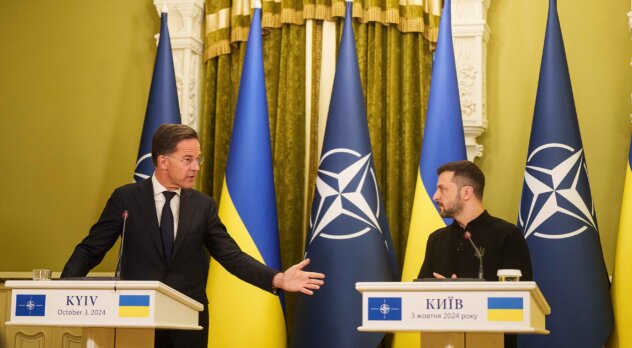
GOA - The European Union today presents itself as a defender of democracy, human rights, and international law. Yet nowhere is the hollowness of this claim more exposed than in Ukraine. The EU’s uncritical embrace of Volodymyr Zelensky—while condemning leaders like Nicolás Maduro as dictators - reveals not a principled commitment to democracy, but a selective morality rooted in power, obedience, and geopolitical convenience.
This double standard is not accidental. It is structural. And it signals a deeper civilisational crisis: Europe has abandoned its own post-war lessons and buried its moral compass beneath NATO’s militarism.
Selective democracy and the politics of hypocrisy
Zelensky is celebrated in Brussels as the embodiment of democratic resistance. Yet Ukraine under his leadership has postponed elections indefinitely, banned opposition parties, consolidated media under state control, and functioned under emergency rule for years. Corruption - well documented even by Western institutions prior to 2022—has not vanished; it has merely become inconvenient to acknowledge.
None of this provokes EU outrage. Meanwhile, Venezuela is relentlessly sanctioned and vilified despite holding elections, maintaining opposition participation, and enduring extraordinary economic warfare. The distinction is not democratic legitimacy. It is alignment. One obeys Western strategic interests; the other resists them. Europe no longer evaluates democracy by substance, but by loyalty. This is not liberalism. It is imperial preference masquerading as virtue.
NATO expansion and the road to war
To understand Europe’s complicity in Ukraine’s destruction, one must return to the post–Cold War moment. NATO, rather than dissolving or transforming into a defensive, cooperative framework, expanded relentlessly eastward—despite explicit assurances given to Soviet and Russian leaders that it would not do so.
From Poland and the Baltic states to the eventual courting of Ukraine and Georgia, NATO’s advance was not defensive. It was provocative. Russia’s objections—dismissed as paranoia—were repeatedly ignored. European leaders chose subservience to Washington over continental security architecture rooted in dialogue.
Ukraine became the fault line. By treating NATO expansion as inevitable and Russian red lines as illegitimate, Europe helped engineer a conflict it neither had the courage to prevent nor the wisdom to resolve.
The Minsk betrayal
The Minsk I (2014) and Minsk II (2015) agreements were designed to halt the war in eastern Ukraine and provide a political framework for coexistence. They called for decentralisation, autonomy for Donbas, ceasefires, and constitutional reform. Crucially, they recognised Ukraine as a plural society with contested identities.
These agreements were never sincerely implemented.
Years later, former Western leaders openly admitted that Minsk was used to buy time—to arm Ukraine, train its forces, and prepare for a future confrontation. This admission is devastating. It confirms that diplomacy was instrumentalised, not honoured. From the standpoint of international law and ethics, this is a grave violation of good faith. From the standpoint of just-war theory, it is catastrophic.
Just war theory and moral failure
Classical just-war theory—rooted in thinkers like Augustine, Aquinas, and later secular ethicists—rests on key principles: just cause, proportionality, last resort, and reasonable chance of success. By these standards, Europe’s role in Ukraine fails repeatedly.
Was war the last resort? No. Diplomatic frameworks existed and were deliberately undermined. Is the suffering proportional to the stated aims? Entire cities destroyed, millions displaced, a generation traumatised—for what? Is there a reasonable chance of success? Even Western military analysts now admit the war cannot be won decisively.
Europe continues to fuel the conflict not because victory is plausible, but because retreat would expose its moral bankruptcy. This is not just strategic failure. It is ethical collapse.
Ukraine as sacrifice zone
Ukraine has become a sacrifice zone for Western ambition. Its people are praised for “resilience” while being denied peace. Its economy is hollowed out, its youth turned into cannon fodder, its sovereignty subordinated to military dependency.
War profiteers flourish. Arms manufacturers record profits. Reconstruction contracts are pre-allocated to Western corporations. Ukraine’s future is being mortgaged before the war has even ended.
This is colonial logic—modernised, sanitised, and repackaged as solidarity.
Post-colonial Europe: Empire without responsibility
Europe claims to have transcended its imperial past. Yet in Ukraine, we see colonial patterns re-emerge: proxy war, extraction, dependency, and moralising narratives imposed from above.
Post-colonial theory teaches us that empire does not disappear—it mutates. Today’s empire operates through financial leverage, military alliances, and ideological discipline. NATO is not merely a defensive alliance; it is an instrument of Western order maintenance. Europe has surrendered strategic autonomy to this structure. It no longer thinks geopolitically; it obeys. In doing so, it has forfeited its claim to civilisational maturity.
A continent in civilisational crisis
Europe once promised “never again.” Never again war by proxy. Never again blind militarism. Never again sacrificing small nations to great-power games. Those promises lie in ruins.
Instead of acting as a mediator between the East and the West, Europe chose to become an extension of Washington’s security doctrine. Instead of championing peace, it criminalised dissent, censored debate, and silenced those who called for negotiations. This is not strength. It is fear disguised as righteousness. A civilisation that cannot question itself is already dead.
Reparations, responsibility, and undoing NATO’s grip
If Europe wishes to recover even a fraction of moral credibility, symbolic gestures will not suffice.
First, it must acknowledge its role in provoking and prolonging the war—through NATO expansion, Minsk duplicity, and refusal to pursue sustained diplomacy.
Second, it must challenge the assumption that NATO equals security. The alliance has become a destabilising force, not a guarantor of peace.
Third, Europe must commit to reparative justice for Ukraine—not as charity, but as responsibility. This includes unconditional reconstruction, debt cancellation, and support for political sovereignty free from military coercion.
Finally, Europe must rediscover diplomacy as a civilisational practice, not a tactical pause between wars.
A choice still remains
Ukraine is not only a battlefield. It is a mirror. It reflects what Europe has become: a continent that lectures the world on values it no longer practices, that weaponizes morality while abandoning ethics, that calls war peace and obedience democracy.
History will judge this moment harshly. Yet a choice remains. Europe can continue down this path—entrenched, militarised, morally bankrupt - or it can reclaim the courage to say no to empire, yes to dialogue, and yes to a future not built on ruins.
Civilisations do not die only from invasion. They die when they lose the capacity for self-critique.
Europe is dangerously close.
(Ranjan Solomon is an observer-analyst on empire, war, and the ruins of liberal Europe.)
Leave a Comment